


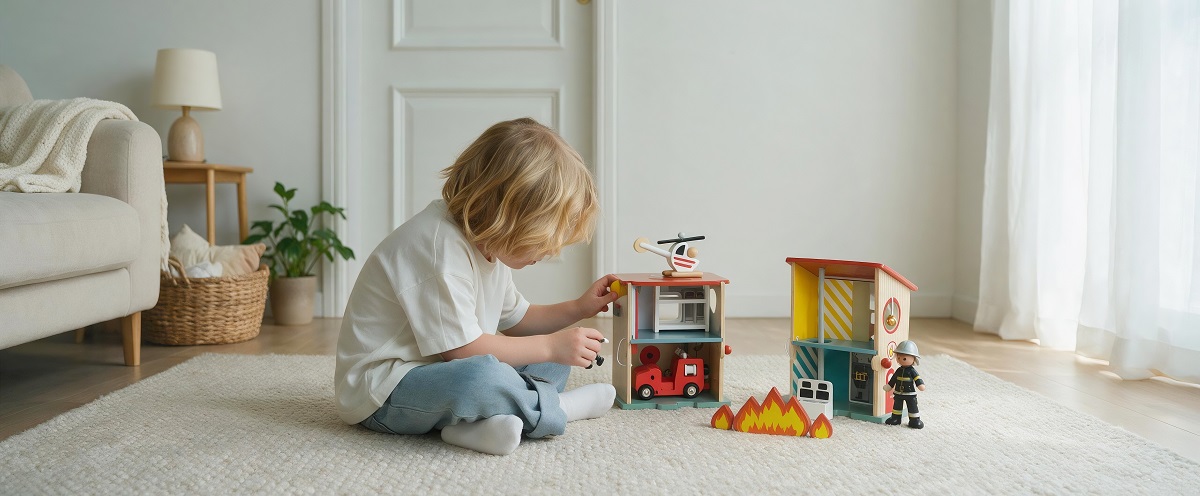
Every child can imagine becoming someone new.
Pretend play is more than just fun—it helps children understand the world, express themselves, and build essential life skills.
When a child pretends to cook dinner, fix a broken toy, care for a patient, or rescue people from a fire, they are doing much more than playing. They are exploring everyday experiences, expressing their ideas, and creating their own understanding of the world around them.
From a toy kitchen to a simple wooden toy, almost anything can become part of an imaginary adventure. And through these simple moments of “let’s pretend,” children are learning, growing, and discovering who they can be.
What Is Pretend Play?
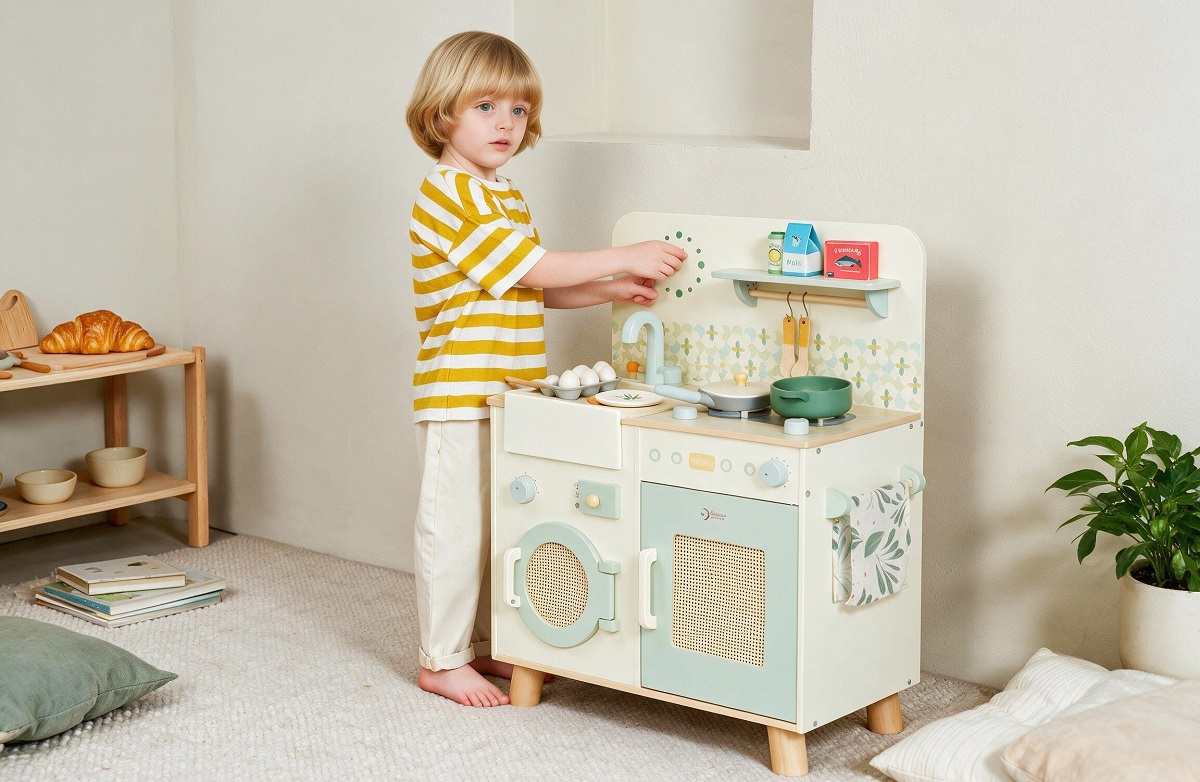
Pretend play happens when children use their imagination to create stories, act out roles, or transform ordinary objects into something new.
A wooden block can become a building. A wooden spoon can become a microphone. A toy kitchen can turn into a busy restaurant, while a dollhouse can become a home filled with stories and adventures.
Unlike games with fixed rules or one correct answer, pretend play is open-ended. Children decide what happens next, create their own characters, and shape their own stories.
Why Pretend Play Is So Important

Communication, cooperation, empathy.
Builds Creativity
Pretend play encourages children to think beyond what they see. Instead of following instructions, they invent their own scenarios and explore endless possibilities.
Supports Language and Communication
Children naturally practice speaking, listening, storytelling, and expressing their thoughts through role play.
Develops Social and Emotional Skills
By acting as different people, children begin to understand emotions, cooperation, and empathy.
Encourages Problem-Solving
Every pretend adventure presents challenges that children solve using creativity and logical thinking.
Builds Confidence Through Independence
Children make decisions, create rules, and guide their own stories, helping build confidence.
How Parents Can Encourage Pretend Play
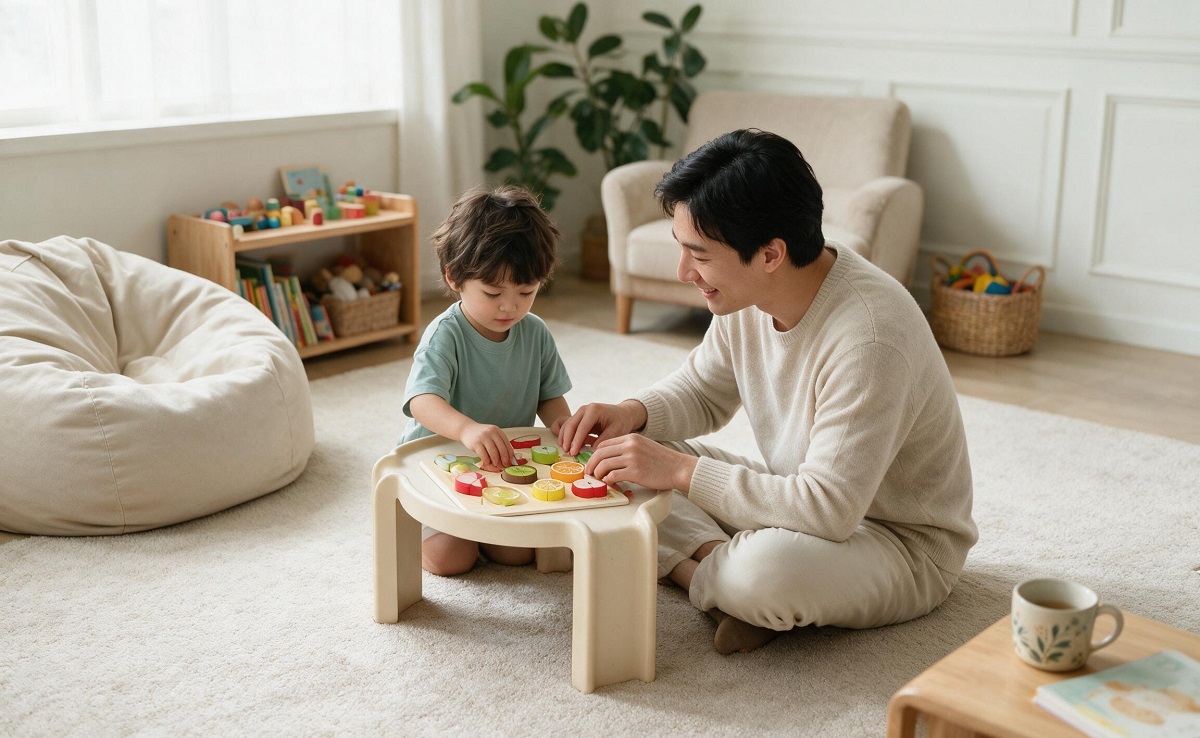
Creativity and problem-solving through hands-on play.
You do not need complicated activities to encourage imaginative play. A few simple choices can make a big difference:
• Provide open-ended toys that can be used in different ways.
• Let children take the lead and follow their ideas.
• Create space for imagination without directing every moment.
• Join in occasionally and follow your child's ideas.
Sometimes, the best thing adults can do is simply give children the time, space, and freedom to imagine.
Toys That Inspire Imaginative Play
At Classic World, we believe the best toys inspire children to imagine rather than tell them exactly how to play.
A pretend-play kitchen can become a restaurant. A coffee maker can become part of a busy café. A tool bench can turn a child into a builder. A dollhouse can become a home filled with stories.
From pretend-play sets and role-play toys to blocks and vehicles, open-ended toys give children the freedom to create their own worlds.
Because there is no single right way to play, every child can bring their own ideas, stories, and imagination to the experience.
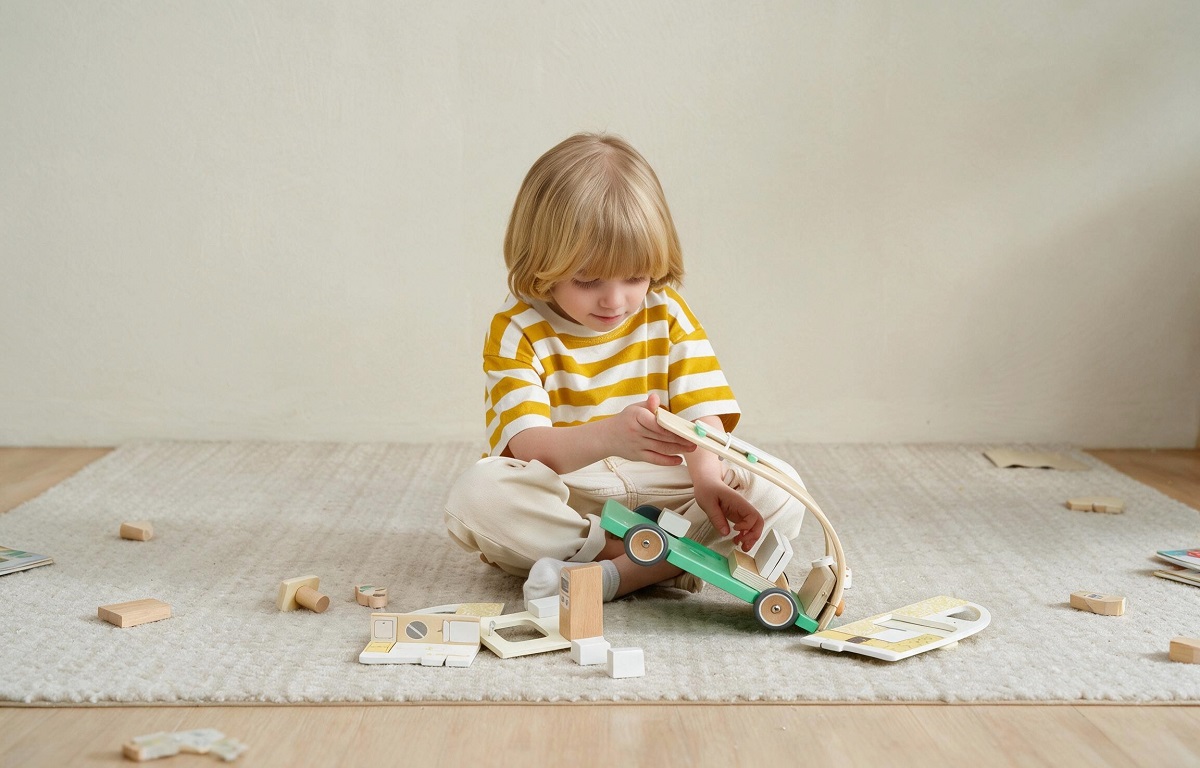
Children create their own stories.
Final Thoughts
Pretend play may look simple, but behind every imaginary adventure, important learning is taking place.
As children create stories, explore different roles, communicate their ideas, solve problems, and make their own decisions, they are developing skills that can support them far beyond playtime.
Every great adventure starts with a little imagination.
And sometimes, all it takes is three simple words:
“Let’s pretend.”
END

No 8 Xinrui Road,
Wuxiang Town Industry Park,
Yinzhou District, Ningbo, Zhejiang, PRC


