


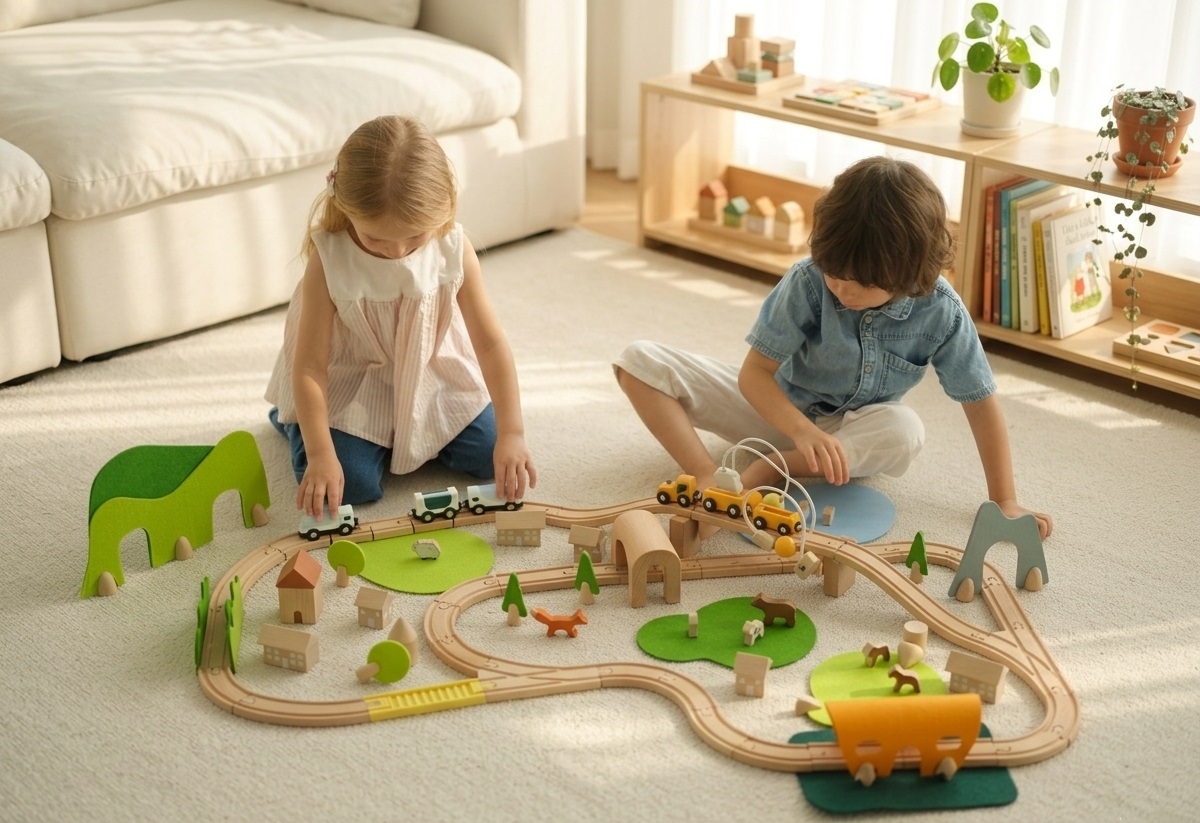
Today's children are growing up in a world surrounded by screens. From tablets and smartphones to televisions and digital entertainment, technology is part of everyday life.
While screens can offer educational value and convenience, children also need opportunities to explore the world on their own. Independent play provides that opportunity.
When children are given the freedom to play, imagine, build, and create without constant instructions or digital stimulation, they develop important skills that support lifelong learning and confidence.
What Is Independent Play?
Independent play happens when children engage with toys, activities, or imaginative scenarios on their own.
It doesn't mean children are left alone. Instead, it means they are given the space to make choices, solve problems, and guide their own play experiences.
Whether building a train track, preparing an imaginary meal, or creating stories with animal figures, independent play encourages children to take the lead.
Why Independent Play Matters
Builds Confidence
When children figure things out for themselves, they gain a sense of accomplishment.
Completing a puzzle, building a structure, or creating a pretend-play story helps children believe in their own abilities and encourages them to try new challenges.
Encourages Creativity
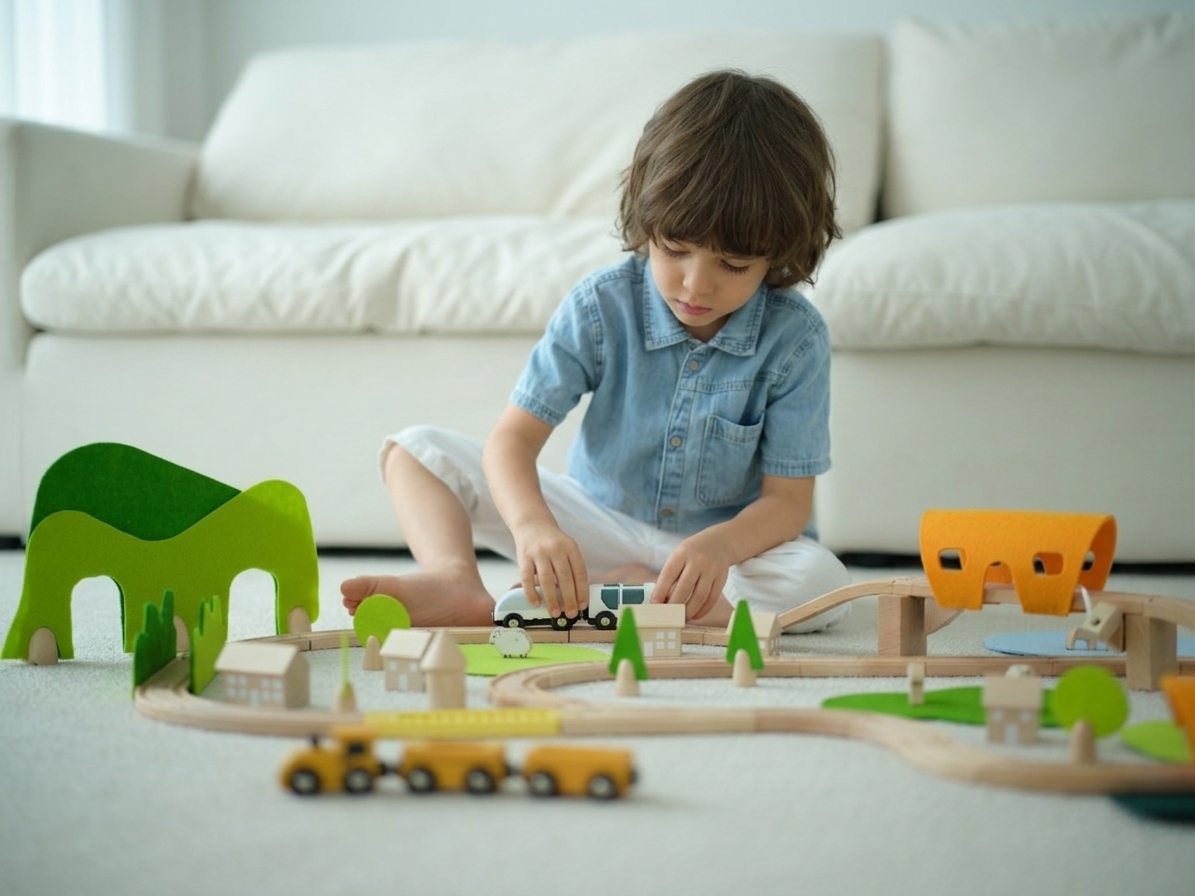
A wooden train track can become a busy city, a countryside adventure, or a magical journey. Open-ended toys allow children to create new stories every time they play.
Develops Problem-Solving Skills
Children learn how to connect pieces, balance structures, organize materials, and find solutions when things don't go as planned.
These experiences help develop critical thinking and resilience.
Supports Focus and Concentration
This ability to focus on a task is an important skill that supports future learning both at home and in school.
How Parents Can Encourage Independent Play?
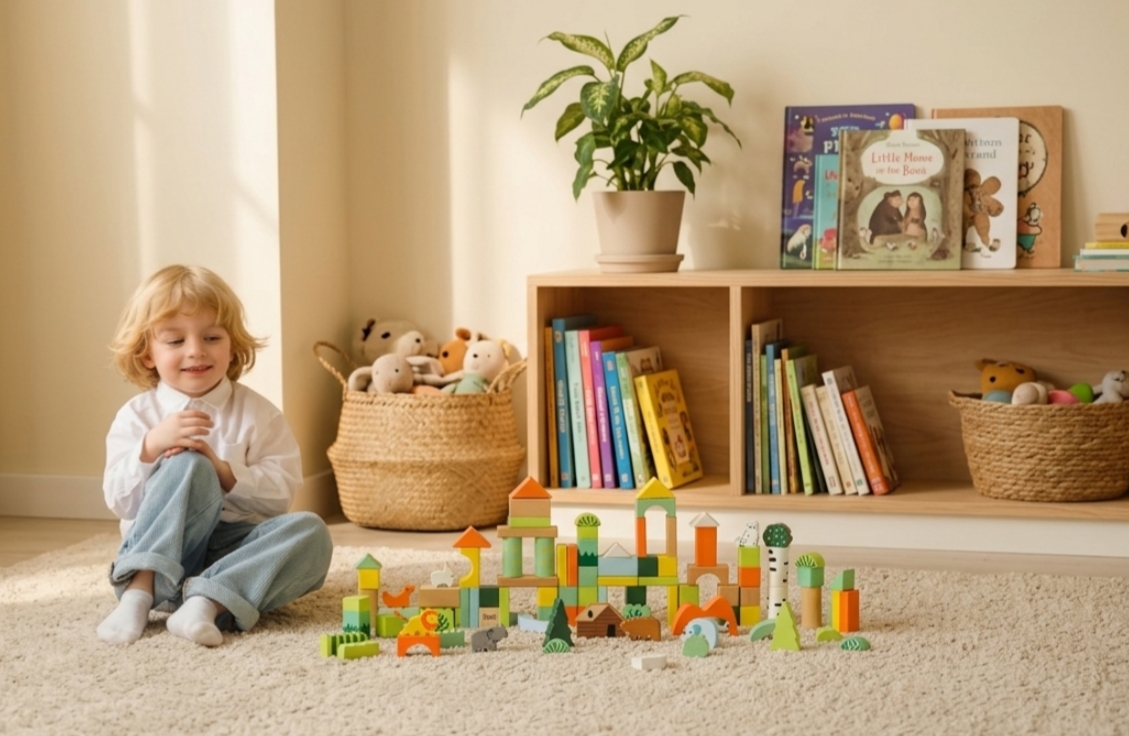
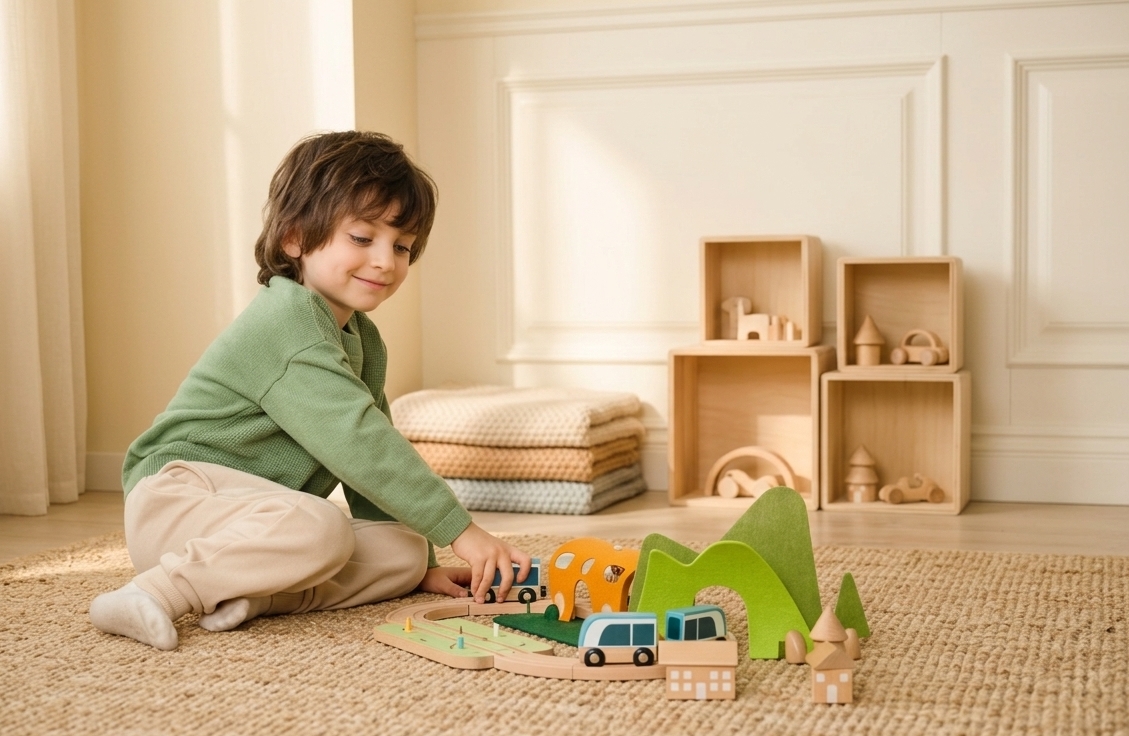
Create an Inviting Play Space
Choose Open-Ended Toys
Building sets, train tracks, pretend-play toys, and wooden blocks provide endless opportunities for creativity.
Allow Time for Unstructured Play
Giving children time to play freely helps them develop independence and confidence in their own ideas.
Follow Their Interests
Children are more likely to engage independently when activities connect with their interests, whether that's vehicles, animals, music, cooking, or building.
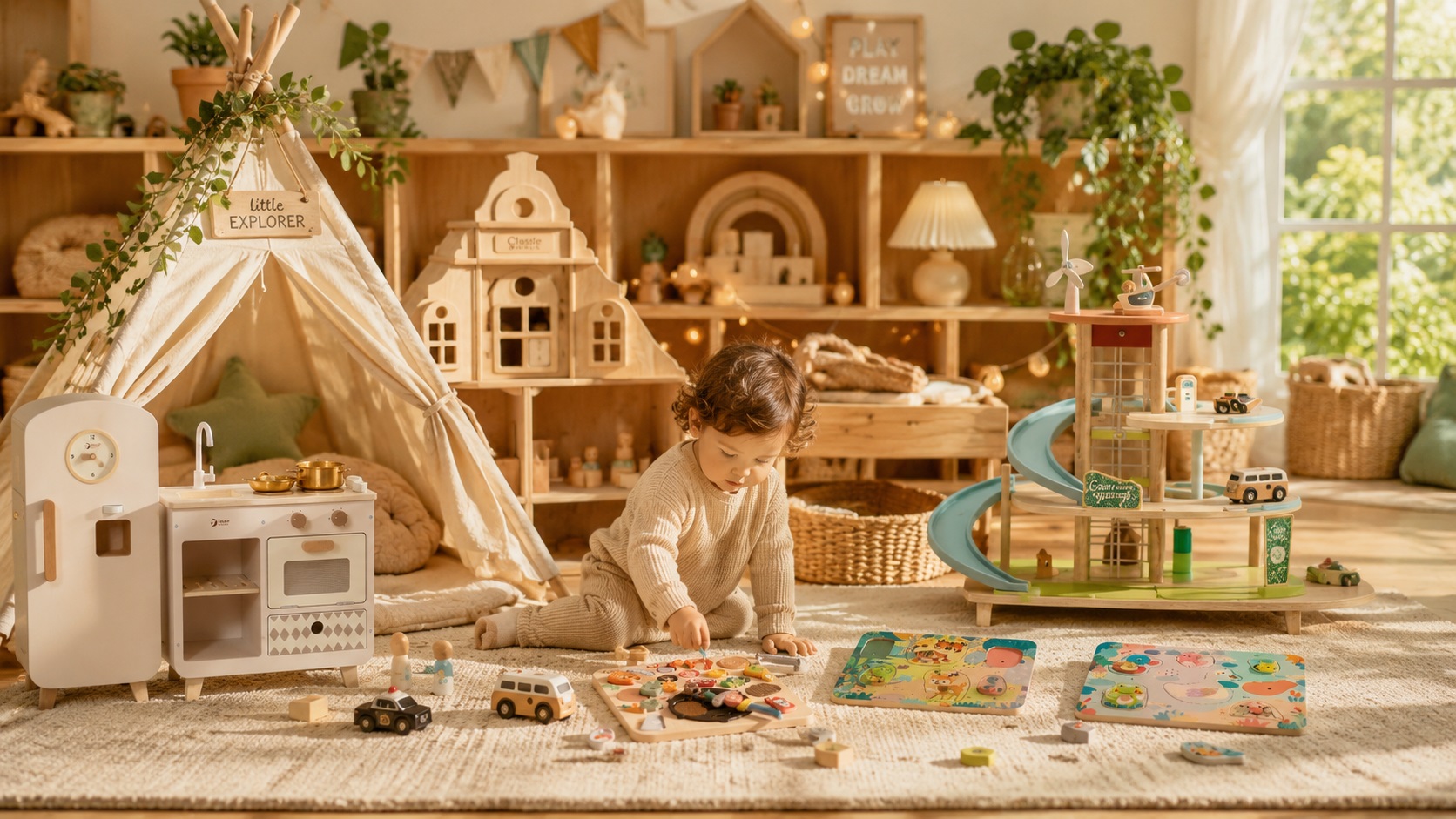
Toys That Inspire Independent Play
At Classic World, we believe the best toys invite children to explore, imagine, and create at their own pace.
Wooden train sets, building toys, pretend-play kitchens, puzzles, and activity toys all encourage children to take the lead in their play experiences while developing valuable life skills along the way.
Final Thoughts
Independent play isn't about keeping children busy—it's about giving them the freedom to discover their own abilities.
By creating opportunities for screen-free, open-ended play, parents can support creativity, confidence, problem-solving, and a lifelong love of learning.
Sometimes, the most meaningful adventures begin with a few simple toys and a child's imagination.
THE END

No 8 Xinrui Road,
Wuxiang Town Industry Park,
Yinzhou District, Ningbo, Zhejiang, PRC


